Angry young men vs. modest provincials? Reimagining the dissident writer in Russian cinema

Otto Boele (Universiteit Leiden)

Abstract

This paper explores the figure of the dissident-writer in recent Russian cinema and TV drama, specifically the way in which these productions appropriate and (de-)construct mythologies of the shestidesiatniki (men/women of the 1960s) making them subservient to current narratives on protest and political dissent in late-Putinist Russia (post 2012). The purpose is to show that by “domesticating” some of these former dissidents or otherwise ostracized authors (while excluding others), these films and TV series reimagine the 1960s as a seemingly romantic, but essentially anomalous time in which the literary forces of the Russian heartland (Aleksandr Vampilov, Nikolai Rubtsov) were undeservedly marginalized by the noisy avant-gardists in the capitals (Akhmadulina, Yevtushnko, Voznesensky). Focusing primarily on  Tainstvennaia strast’ (Furman, 2016), a Channel One production based on Vasily  Aksenov’s last novel, and Oblepikhovoe leto (Alfiorov, 2018), a biopic on the career of Aleksandr Vampilov, I hope to demonstrate how one of the most liberal periods of Russia’s twentieth-century history is being cinematically exploited for the purpose of alerting the viewer about “similar” phenomena in the present (“latte-sipping hipsters” in Moscow vs. the “glubinnyi  narod”, “Gayropa vs. “traditional values”etc.).

Biografie

Otto Boele obtained his MA degree in Russian at the University of Amsterdam and his PhD at the University of Groningen. He is now Associate Professor of Russian literature at the University of Leiden. He is the author of The North in Russian Romantic Literature (1996), Erotic Nihilism in Late Imperial Russia. The Case of Mikhail Artsybashev’s “Sanin” (2009) and a co-editor of Post-Soviet Nostalgia. Confronting the Empire’s Legacies (2019). Recently, he has published a number of articles on glasnost cinema and the collective memory of the 1990s.
Habsburg Pan-Slavism and its Czechoslovak and Yugoslav legacies

Alexander Maxwell (Victoria University, Wellington)

Abstract

As the era of nationalism began, Slavs in the Habsburg Empire espoused Panslavism, which they imagined as a linguistic community arising because all Slavs spoke the same “Slavic language.” Efforts to promote this language, and the distinct literary traditions it encompassed, rested on the unstated assumption that a single “language” may contain multiple literary traditions, imagined as “dialectical” yet written in distinct orthographies. This paper examines this literary Panslavism as a form of nationalist politics. It suggests that literary Panslavism affected subsequent Czechoslovak and Yugoslav nationalism, both of which similarly posited a single language with multiple literary traditions.

Biografie

Alexander Maxwell is associate professor of history at Victoria University in Wellington, New Zealand. He completed his Ph.D. at the University of Wisconsin, Madison in 2003. He previously taught at the University of Wales Swansea, and the University of Nevada, Reno. He is the author of Choosing Slovakia, Patriots Against Fashion, and Everyday Nationalism in Hungary. He has published widely on nationalism theory and nationalism in East-Central Europe. He has guest edited themed issues of Nationalities Papers, Nationalism and Ethnic Politics, the Journal of Nationalism, Memory, and Language Politics, German Studies Review, and Central Europe. He is currently working on Habsburg Panslavism.

Yugoslav internal migration policies within the context of population transfers in postwar Europe

Petar Grubišić (Ghent University)

Abstract

The end of the Second World War was a catalyst for massive population transfers, which resulted in an unmixing of people on an unprecedented scale. This activity primarily targeted the numerous German populations that had settled in the border regions of Central and Eastern Europe. They were replaced with appropriate ethnic groups who were supposed to bring stability and the necessary workforce for regional development. Postwar population shifts thus combined ethnopolitical and socio-economic motives. The precise policies, practices and responses to the multiple population shifts taking place in post-war Europe, however, differed from case to case.

This talk will situate internal migration in Socialist Yugoslavia within the broader context of population transfers in Europe after the Second World War. It will particularly draw parallels with the cases of Poland (Recovered Territories) and Czechoslovakia (Former Sudetenland). The talk will discuss a number of Yugoslav particularities. It will address the interconnection of internal migration with agrarian reform, its primarily voluntary character, and how government classification of people on the move paid attention to previous political and migration processes.

Biografie

Petar Grubišić is a Ph.D. Researcher at Ghent University (Department of Languages and Cultures) since September 2021. He earned an MA in History (2013-2017) as well as an MA in Archaeology (2013-2018) at the University of Zagreb. His Ph.D. project is tentatively titled: “Internal Migration and Regional Development in Socialist Yugoslavia: Settlement from Dalmatia to Slavonia and Vojvodina Compared”. This research focuses on the state-guided colonisation from the region of Dalmatia to similarly multicultural regions of Slavonia and Vojvodina. It particularly looks into the policies of internal migration and its impact on the communities involved through a micro-historical comparative analysis of colonist settlements in Vojvodina and Slavonia.

Towards a cultural history of Albanians in Tito’s Yugoslavia

Christian Voss (Humboldt University, Berlin)

Abstract

The lecture discusses the cultural contribution of the Albanian-speaking population in Tito’s Yugoslavia under the condition of its highly contradictory political treatment, oscillating between repression and discrimination in the periods 1944-1961 and 1981-1998, and overt promotion between 1966 and 1981. The biographies of “cultural defectors” like the poet Esad Mekuli, famous actors Behim Fehmiu and Faruk Begolli or sportsmen Fadil Vokrri clearly indicate that the riots in Kosovo in 1981 triggered the loss of Yugoslav loyalty among the Albanians. The limits of Yugoslav nation-building can also be shown in the representation of Albanians in Miroslav Krleža’s Encyclopedia of Yugoslavia, where Serbian nationalist intervention in 1981 insisted on the rewriting of the articles on Albania(ns) to reinstall the traditional hegemonic and paternalistic discourse.

Biografie

Christian Voss has been Head of the Department for South Slavic Studies at Humboldt University Berlin since 2006. He finished his PhD on Church Slavonic in 1996 and his habilitation on Slavic minorities in Greece in 2004 in Freiburg/Br. He has extensively published in the fields of sociolinguistics, contact linguistics and language policy in the Balkans. He is the founding director of the Interdisciplinary Center “Crossing Borders” in Berlin, editor of the series “Studies on Language and Culture in Central and Eastern Europe” and co-editor of several journals.

“What kind of dictionaries do the students of Slavonic languages need? The structure and purpose of Russian for all occasions. A Russian-English Dictionary of Collocations and Expressions.

Shamil Khairov (Glasgow University)

Abstract

What is a polithematic dictionary? How to dissect real life in a dictionary ‘for all occasions’? What is ‘a communicative fragment’ and why is it so important when learning a foreign language? These are the main questions discussed in the lecture.

Admitting that for effective communication one should possess a repertoire of ready-to-use collocations and phrases the authors found a theoretical support in Boris Gasparov’s concept of ‘communicative fragment’ – a linguistic unit which speakers are able to reproduce spontaneously as part of the process of language production, and which at the same time, can undergo an infinite variety of modifications and fusions.

The second part discusses treating expressivity and contractions like мухосранск or старпёры (старые пердуны) in Russian for All Occasions.

The ways the dictionary can be used in class, in independent language learning or in translation practices are considered in the conclusion

Biografie

Dr Shamil Khairov is Slavist by training (Ph.D. from St. Petersburg State University) and has taught Russian, Polish and Slovak languages in Britain, Ireland, Slovakia and other parts of Europe. He also speaks Bulgarian, Czech, Bosnian, Croatian, Serbian and Slovene.

From 2005 he works as lecturer in Russian at the University of Glasgow. He is a designer and convener of the Russian for Social Scientists postgraduate programme. Shamil Khairov is a co-author (with J. Dunn) of Modern Russian Grammar (Routledge, 2009) and Russian For All Occasions. A Russian-English Dictionary of Collocations and Expressions (Routledge, 2019). His other publications deal with Slavonic lexicography, phraseology, and inter-cultural reception of different strata of Slavonic languages.

One of his most popular courses for undergraduate students is Russian 20th Century Visual Culture: he delivered it as guest lecturer, partly or in full, in several European universities.

Shamil Khairov is a keen black-and-white photographer and has had solo exhibitions in Germany, Poland, Czech Republic, Belgium, Scotland and Russia.

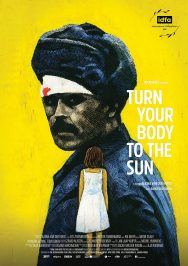
Turn your Body to the Sun

Nederland, Rusland 2021 – Aliona van der Horst

Deze documentaire vertelt het ongelooflijke verhaal van een Sovjetsoldaat van Tataarse afkomst die in de Tweede Wereldoorlog gevangen werd genomen door de Nazi’s. Zijn dochter Sana probeert, via zijn dagboeken en verschillende persoonlijke en openbare archieven en registers, het spoor van haar zwijgende vader terug te volgen, om te begrijpen wat hem maakte tot de man die zij als kind kende.

Terwijl ze Sana op haar zoektocht vergezelt, spit regisseur Aliona van der Horst ook filmarchieven uit om sporen te vinden van de miljoenen Sovjetsoldaten die in de vuurlinie lagen van oorlogvoerende dictators; zij die erbij waren maar voor het gemak uit het verhaal over de mondiale oorlog werden weggelaten.

Door met gemengde technieken als double-pass, inzoomen en inkleuren zich het archiefmateriaal opnieuw toe te eigenen, zoekt de filmmaker de ziel van het beeld – de kleine, subtiele overblijfselen van een omvangrijke, maar terloops uitgewiste menselijke tragedie. Voorzichtig maar vastberaden ontvouwt zich deze geschiedenis in een film die zestig jaar stilte doorbreekt.

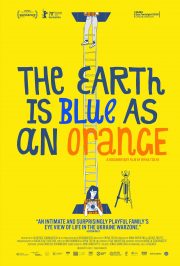
The Earth is Blue as an Orange

Oekraïne, 2020 – Iryna Tsilyk

Alleenstaande moeder Anna en haar vier kinderen wonen na 2014 aan het oorlogsfront van Donbas in Oekraïne. Buiten heerst er chaos en regent het bommen, maar binnen maakt het gezin van hun huis een veilige haven vol leven en licht. De gezinsleden zijn alle vijf gepassioneerd door cinema, wat hen ertoe aanzet om een film te maken over hun leven tijdens de oorlog. Het creatieve proces roept de vraag op hoe groot de magische invloed van film kan zijn in tijden van rampspoed. En hoe zet je de gruwel van de oorlog om in een fictief verhaal?

Voor Anna en haar kinderen is het verwerken van hun trauma in een kunstwerk de ultieme manier om mens te blijven.

De documentaire viel meermaals in de prijzen, onder andere op Sundance Film Festival (VS), Millenium Docs Against Gravity Film Festival (Polen), International Human Rights Documentary Film Festival (Oekraïne) en Artdocfest (Letland).

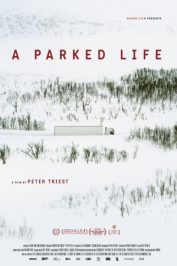
A Parked Life

België/Bulgarije, 2022 – Peter Triest

A Parked Life is het intiem portret van Petar Doychev, één van de honderdduizenden Oost-Europese vrachtwagenchauffeurs die 48 weken per jaar het Europese vasteland doorkruisen. Terwijl Petar de monotone ritten, de vele uren wachten en de bijna constante onvriendelijke behandeling ondergaat, loopt thuis zijn relatie fout en blijft zijn kind een vreemde voor hem. Gaandeweg verandert de film van toon en stijl en wordt de kijker dieper ondergedompeld in de emotionele consequenties van dit leven voor de chauffeur. De vele kilometers die Petar aflegt worden een metafoor voor een innerlijke reis, een pelgrimstocht: Waarom doet hij dit? Hoe staat hij tegenover zijn levensdromen?

In 2016 won schrijver en regisseur Peter Triest de IDFA-Mediafondsprijs met een filmscript over de vele Oost-Europese vrachtwagenchauffeurs op onze snelwegen. A Parked Life won bij de première FIPADOC 2022 de European Stories Award.

The reactivation of the Georgian – Abkhaz de facto border in the context of Russia’s war in Ukraine: An ethnographic study of the shifting social dynamics in the borderland

Gaëlle Le Pavic (United Nations University | Universiteit Gent)

Abstract

In 1993 Abkhazia parted from Georgia, only gaining very limited recognition from Russia together with Nicaragua, Venezuela and Nauru in 2008. Since then, the borderization of the Georgian – Abkhaz borderland spanning over the district of Gal(i) on the Abkhaz controlled-side and the district of Zugdidi on the Georgian controlled-side, has only increased. This process of borderization has a significant impact on the daily lives of people living in the borderland, in particular in their access to social services. Russia’s war in Ukraine is currently reactivating the Abkhaz – Georgian de facto border with important social consequences for people living on both sides, especially for those inhabiting the borderland. Based on a qualitative methodology encompassing (online) interviews, (visual) ethnography and observations in multiple sites along the de facto border, this presentation aims to analyse the social consequences of the de facto Abkhaz-Georgian border in the context of Russia’s war in Ukraine. The results show that the crossing of the de facto border is tightening, impacting in particular the inhabitants of the Gal(i) district, whose majority is Migrelian, an ethnic Georgian subgroup. While many Russians are arriving in Georgia, mainly to escape the (partial) mobilization, many Georgians are empathizing with Ukrainians, remembering the Russo-Georgian 2008 war and the Abkhazian-Georgian war of 1992-1993. Last but not least, the Abkhaz majority is not supporting  Russia’s war in Ukraine and is trying to contain Russia’s clout in Abkhazia, while rejecting the Georgian rhetoric of Abkhazia being occupied by Russia.

Biografie

Gaëlle is a PhD student at the United Nations University (UNU-CRIS) and the University of Ghent in Belgium. Her research topic focuses on access to social services in situations of regional separatism. Her research studies the role of civil society organisations in facilitating this access within and across borders without (full) legal recognition, or de facto borders. The two cases she studies are Abkhazia and Transnistria, two de facto states that seceded respectively from Georgia and Moldova in the 1990s. Gaëlle is also an active member of the Centre for the Social Study of Migration and Refugees (CESSMIR).

Previously, Gaëlle worked as a researcher at the Department of Social Work and Social Pedagogy at Ghent University. She was involved in two Horizon 2020 research projects: RefugeeWellSchool, which aims to improve the well-being of refugees in schools, and InHere, which stands for inclusive holistic care for refugees and migrant victims of sexual violence in Belgium, Ireland and the UK. In recent years, Gaëlle was project manager at the Development Office of the College of Europe (Bruges) and, before that, at the French Embassy in Croatia.

Over wie mag men schrijven? Biografie, literatuur en tijd in Vladimir Nabokovs De gave

Luc Breukelman (Universiteit Gent)

Abstract

Vladimir Nabokov maakte in de jaren ’30 nog deel uit van de Russische emigrantengemeenschap die na de Russische Revolutie en Russische Burgeroorlog was ontstaan. Deze gemeenschap hechtte een groot belang aan de continuïteit van Russische literatuur in ballingschap. Juist daardoor werd de toekomst van Russische literatuur actief ondervraagd in de literaire debatten van deze gemeenschap. Vladimir Nabokovs laatste Russische roman, De gave (1937-1938), kan gelezen worden als zijn antwoord op deze debatten, als een zoektocht naar een toekomst voor literatuur, zowel Nabokovs eigen literatuur als Russische literatuur in zijn algemeen. Dit antwoord komt in de vorm van een Künstlerroman, een roman over de artistieke groei van een nog jonge fictieve emigrantenschrijver, Fjodor Godoenov-Tsjerdyntsev, wiens werken onderdeel zijn van De gave. Twee van deze werken zijn biografieën: Fjodors onvoltooide biografie over zijn vader en zijn voltooide biografie over de negentiende-eeuwse radicale denker en schrijver Nikolai Tsjerynsjevski.

In deze lezing wil ik nader ingaan op de betekenis van de aanwezigheid van deze twee biografieën in Nabokovs roman. Ik zal hierbij stilstaan bij de vragen waarom Fjodor in staat is de ene biografie wel te voltooien en de andere niet en hoe deze tegenstelling gelezen kan worden als onderdeel van Nabokovs zoektocht naar een toekomst voor literatuur. Deze vragen zullen ingebed worden in een vergelijking met andere emigrantenromans die middels een versmelting van biografie en fictie op zoek waren naar een toekomst voor (Russische) literatuur en in een bespreking van de veranderende culturele tijdservaringen tijdens het interbellum die een invloed uitoefenen op de zoektocht naar de betekenis van literatuur.

Biografie

Luc Breukelman heeft in 2022 zijn doctoraat in de Oost-Europese talen en culturen aan de Universiteit Gent behaald. Zijn onderzoek betreft de historische roman van de Russische emigrantengemeenschap van het interbellum met een focus op de biografische roman en de relatie tussen (culturele) tijdservaringen en literatuur. Luc is op dit moment gastdocent aan de Universiteit Gent.