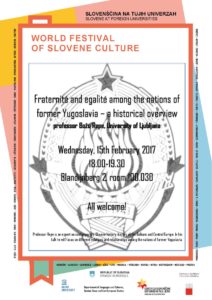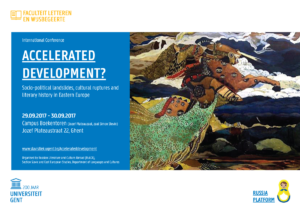
Majdan

Oekraïne, 2014 – Sergej Loznitsa

Sergej Loznitsa verbeeldt in de documentairefilm Majdan de kroniek van de Euromajdanbeweging (2013-2014), de burgerlijke protestbeweging tegen het regime van president Janoekovitsj in Oekraïne. De documentaire neemt de tijd om de evolutie te tonen van de vreedzame betogingen op het Onafhankelijkheidsplein in Kiev naar de bloederige gevechten tussen betogers en oproerpolitie aan het einde van de opstand. Majdan is geen Hollywoodblockbuster met overweldigende special effects. De documentaire sleept de kijker mee door op een integere manier, zonder commentaar, te tonen hoe (een poging tot) revolutie eruitziet als je er middenin staat.

Lice revolucije | The Face of a Revolution

Servië, 2012 – Vladimir Milovanović

Precies tien jaar na de revolutie van 5 oktober 2000,  keert Branko Ilić terug naar Belgrado. Hij was een van de leiders van de studentenbeweging Otpor, die een cruciale rol speelde in de val van het regime van Slobodan Milošević. Samen met Branko Ilić worden we in deze documentaire van Vladimir Milovanović, waarin fictie en realiteit door elkaar lopen, geconfronteerd met de twee gezichten van ‘zijn’ revolutie, de vurige toekomstdromen en de uiteindelijke realiteit. De hoopvolle wensdromen blijken voor de helft of helemaal niet gerealiseerd, of zelfs helemaal vergeten. Deze knappe blik op een revolutie die haar eigen kinderen heeft opgegeten, stelt de vraag of de revolutie eigenlijk geen wrede postmoderne parodie op zichzelf is.

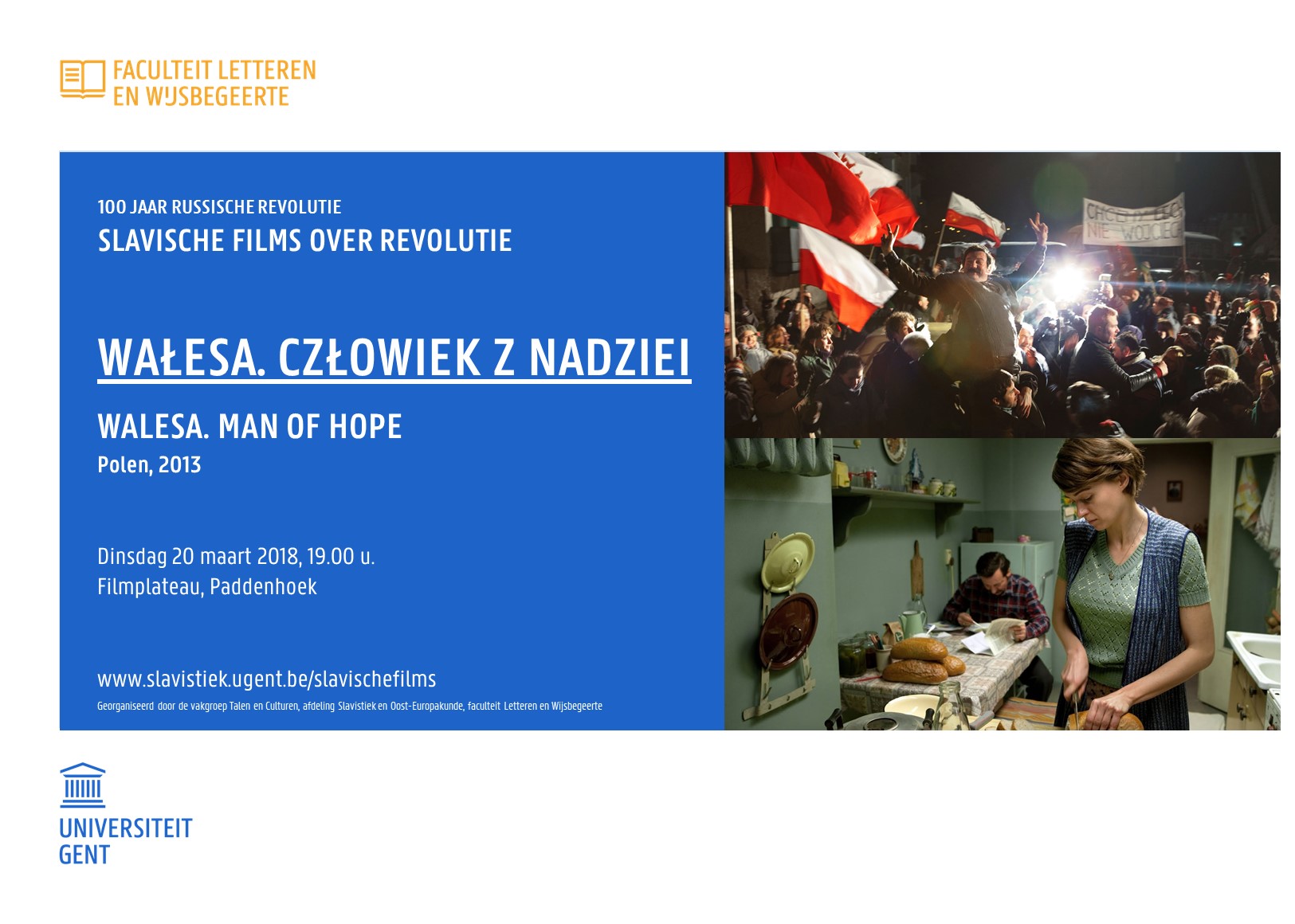
Wałęsa. Człowiek z nadziei | Walesa. Man of Hope

Polen, 2013 – Andrzej Wajda

n deze opzwepende biopic brengt Andrzej Wajda het tumultueuze leven van Lech Wałęsa: van arbeider op een scheepswerf, over vakbondsleider en Nobelprijswinnaar voor de Vrede tot de eerste democratisch verkozen president van Polen. Naast zijn rol in de protesten, vaak geïllustreerd met archiefbeelden uit die tijd, gunt de film ons ook een blik in Wałęsa’s gezinsleven. Met Wałęsa. Człowiek z nadziei voltooit Wajda zijn trilogie over communistisch Polen, lang voordien gestart met Człowiek z marmuru (Man of Marble, 1977) en Człowiek z żelaza (Man of Iron, 1981).

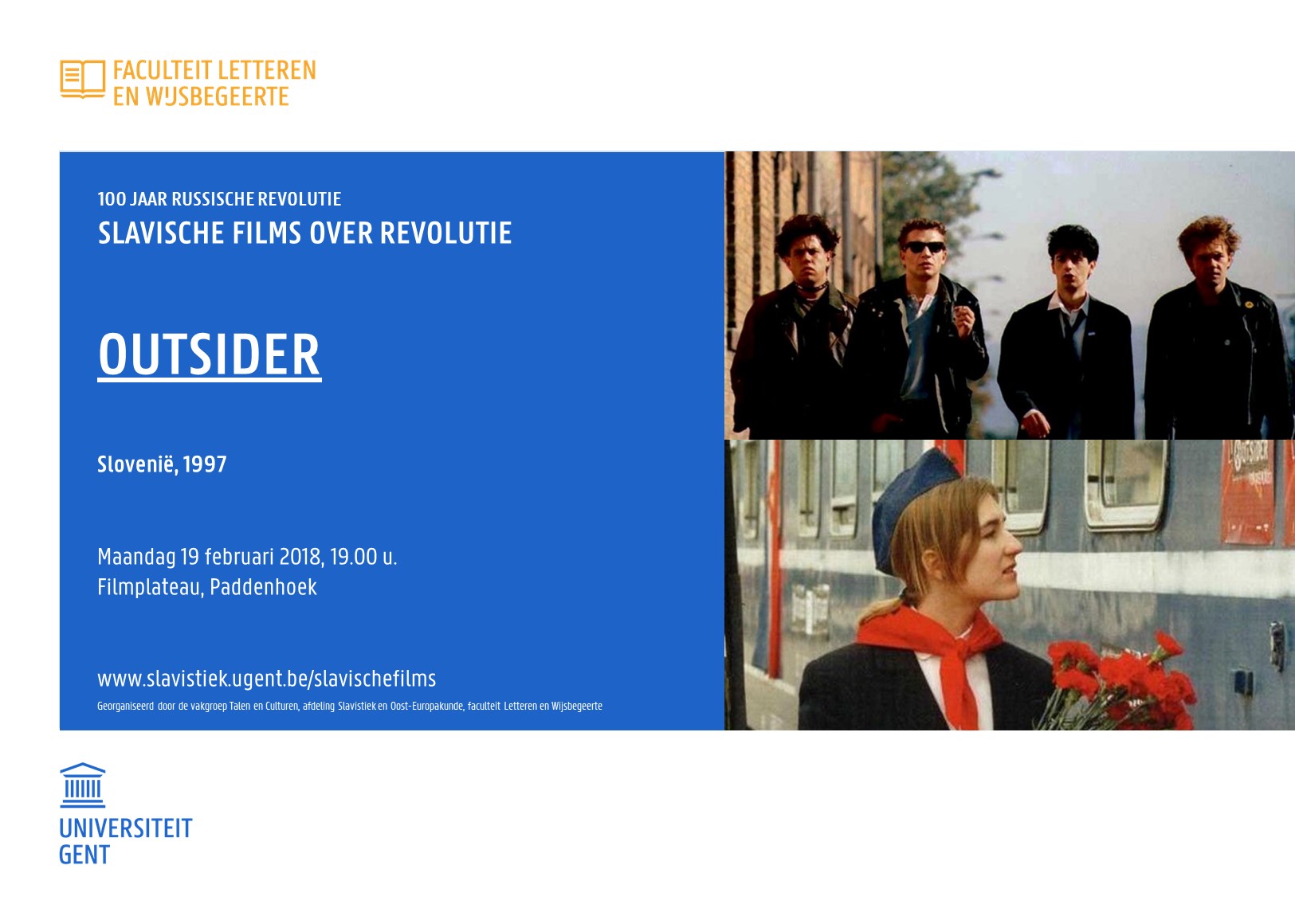
Outsider

Slovenië, 1997 – Andrej Kosak

Outsider is een van de populairste Sloveense films uit de jaren 90. We schrijven Slovenië, 1979. Sead, de zoon van een Sloveense moeder en een Bosnische vader, komt in Ljubljana terecht wanneer zijn vader, een officier in het Joegoslavische leger, een nieuwe post krijgt in de Sloveense hoofdstad. Op school verliest Sead algauw zijn hart aan Metka, een Sloveens meisje, en aan punk, de muziek van de rebelse jeugd in het Slovenië van de jaren 70. De film is Seads verhaal van persoonlijke revolte en rebellie – tegen het socialisme, de harde wil van zijn vader, de Sloveense elite. Grote conflicten zijn onvermijdelijk, net als het tragische einde.

Елена | Jelena

Rusland, 2011 – Andrej Zvjagintsev

Jelena is een film van de Russische regisseur Andrej Zvjagintsev. In tegenstelling tot zijn eerdere allegorische en met symboliek beladen films, zoals het alom geprezen Vozvrasjtsjenie (The Return, 2003), is Jelena (2011) een sociaal geëngageerd familiedrama waarin de economische ongelijkheid in hedendaags Rusland centraal staat. De film vertelt het verhaal van Jelena, een gepensioneerde verpleegster die met de rijke, maar koele zakenman Vladimir is hertrouwd. Hun huwelijk is routineus, zelfs zakelijk, en draait volledig rond de dagelijkse zorg voor Vladimir. Ze hebben beiden uit een eerder huwelijk kinderen: Jelena een zoon, Vladimir een dochter. De zoon van Jelena is een financieel afhankelijke nietsnut die geen job kan houden en zijn gezin in armoede en marginaliteit doet belanden. De dochter van Vladimir is daarentegen een onafhankelijke, hedonistische en verwende vrouw die geen raad weet met haar bestaan. Om de dienstplicht van haar kleinzoon af te kopen, vraagt Jelena Vladimir om financiële steun. Vladimir, die net een hartaanval heeft overleefd, en zijn testament al heeft opgesteld, weigert: hij wil niet voor andermans kosten opdraaien. Vladimirs afwijzing dwingt Jelena tot een daad die haar bestaan voorgoed zal veranderen.

Hokudai Days

GCSEES took part in the Hokudai Days at the University of Ghent, contributing two panels to the event in collaboration with the Slavic-Eurasian Research Center (SERC), Hokkaido University, Sapporo.


29 February 2016, Het Pand, Oude Infirmerie
PANEL Borders and Margins in Eastern Europe (Faculty of Arts and Philosophy, Department of Languages and Cultures and Hokkaido University Slavic-Eurasian Research Center (SERC)

14.00-14.45
Go Koshino (HSRC), A Subverting Perception of Tuteishiya (Local People) in Contemporary Belarusian Literature
14.45-15.30
Motoki Nomachi (HSRC), Questions of the Gorani Ethnolect in the Context of the Disintegration of Serbo-Croatian
15.30-16.15
Rozita Dimova (GCSEES), Displacing Borders through Materiality and Aesthetics in Contemporary Macedonia
16.15-17.00
Dieter Stern (GCSEES), Informal Cross-Border Economies in the Post-Soviet Space as a Field of Linguistic Investigation

1 March 2016, Blandijnberg, 6th floor
STUDENT PANEL Gateways to Eastern Europe: Young researchers and their research
10.00-10.45
Genichi Ikuma (HSRC), Representations of Human Beings in Soviet Unofficial Art
10.45-11.30
Charlotte Bollaert (GCSEES, TRACE), Jean-Paul Sartre in Soviet-Russia: Early Responses and Image Formation


International Platonov Seminar: Platonov and the Revolution

Platonov and the Revolution | Платонов и революция

Particpants: Ben Dhooge (Ghent), Olga Frolova (Moscow), Hans Günther (Bielefeld), Leonid Heller (Paris, Lausanne), Robert Hodel (Hamburg), Konstantin Kaminskij (Berlin), Ilya Kukuy (München) and Yevgeny Yablokov (Moscow).

Х. Гюнтер. Революция и тоска у Платонова
О. Фролова. Диалог А. Платонова с языком его времени (на материале повести “Котлован”)
К. Каминский. От энергетической революции к энергетическому повороту – уроки Андрея Платонова
Р. Ходел. Счастье и/или революция в “Котловане”
Л. Геллер. Платонов: революция, утопия, насилие
Е. Яблоков. Революционный пассеизм Андрея Платонова
И. Кукуй. Неюбилейный Платонов: экранизация амбивалентности в фильме Ларисы Шепитько “Родина электричества”
Б. Дооге. Платонов и “скифство”.


More information

International Conference ‘Accelerated development?’

Accelerated development? Socio-political landslides, cultural ruptures and literary history in Eastern Europe


In 1964 the Bulgarian-Belarusian-Russian scholar Georgii Gachev coined the term ‘uskorennoe razvitie’ or ‘accelerated development’ in his 1964 monograph Accelerated Development of Literature: On the Basis of the Bulgarian Literature of the First Half of the 19thCentury.  The term describes what happened to Bulgarian literature during Ottoman rule. Being a ‘young’ and ‘peripheral’ literature, having started to develop only recently at the time, Bulgarian literature ‘had to’ go through the whole evolution of European literature at a high pace in order to catch up with the latter. One of the side effects of this accelerated development was that characteristics of different style periods could even co-occur. Gachev’s thought-provoking idea has never really received a lot of attention, except in Bulgarian studies, where the concept was elaborated, criticized and / or gave way to new theories (Petar Dinekov, Nikolai Genchev, Roumen Daskalov, Alexander Kiossev …), but mostly with regard to the development of Bulgarian culture and society.

Today Gachev’s theory seems outdated, not in the least for its centralist assumptions – i.e. taking for granted that central cultures take the lead and peripheral cultures follow suit – that form the very basis of the Eurocentric theory. Nonetheless, the potential of the very kernel of the concept is obvious – both for dealing with the literary histories of other ‘young’ and/or ‘peripheral’ literatures in different time periods and for challenging the different notions that form the basis of Gachev’s theory – ‘peripheral’, ‘young’, ‘Western’, ‘dominant’, ‘oppression’, ‘conservatism’. ‘Accelerated development’ may be a suitable term to describe how Western literary critics in the 19th century thought about the quickly evolving, ‘peripheral’ Russian literature of the time. ‘Accelerated development’ may also be applied to the evolution of (certain) Modernist movements in the ‘peripheral’ Eastern Europe. And what to say about the apparent fast-forward evolution of the East-European literatures after the collapse of Communism, quickly adapting Postmodernism, Magical Realism, and other literary trends that other, ‘central’ literatures had been going through earlier?

This conference aims to explore – i.e., to corroborate, to challenge or to further develop – the concept of accelerated development by looking at concrete cases in the literary histories of Eastern Europe where one can speak of a major rupture, such as suddenly acquired cultural independence or freedom or technological evolution, that causes the literature to change course and, possibly, to ‘accelerate’. More specifically, this conference hopes to find new ways to look at the complex relationships between dominant and non- or less-dominant, central and peripheral, old and young literatures and cultures, colonizing and colonized cultures, progressive and conservative cultures, open and oppressive / repressive cultures, etc. Additionally, the conference aims to discuss the (catalytic) role of cultural agents in the process of accelerated development and the tension(s) between literary and extra-literary motivations. Lastly, the conference hopes to shed light on how cultures going through an accelerated development look at their earlier selves and whether, and if so, how accelerated developments may also lead to new, ‘own’ literary forms that are not quite related to the seemingly dominant cultures.


Keynote speakers:Raymond Detrez (Belgium), Galin Tihanov (UK) and Willem G. Weststeijn (The Netherlands).


Organizing Committee: Ben Dhooge, Phaedra Claeys, Michel De Dobbeleer, Miglena Dikova-Milanova, Tilde Geerardyn, Russian Literature and Culture Abroad (RuLCA, Ghent University)

Scientific Committee: Nikolay Aretov (Bulgarian Academy of Sciences, Sofia), Pieter Boulogne (University of Leuven / Ghent University), Raymond Detrez (Ghent University / University of Leuven), Theo D’haen (University of Leuven), César Domínguez (University of Santiago de Compostela), Dennis Ioffe (Ghent University / University of Amsterdam), Alexander Kiossev (Sofia University), Ellen Rutten (University of Amsterdam), Ivana Živančević Sekeruš (University of Novi Sad)

Conference Venue: Campus Boekentoren: Jozef Plateauzaal & zaal Simon Stevin, Jozef Plateaustraat 22, Ghent, Belgium 


Programme
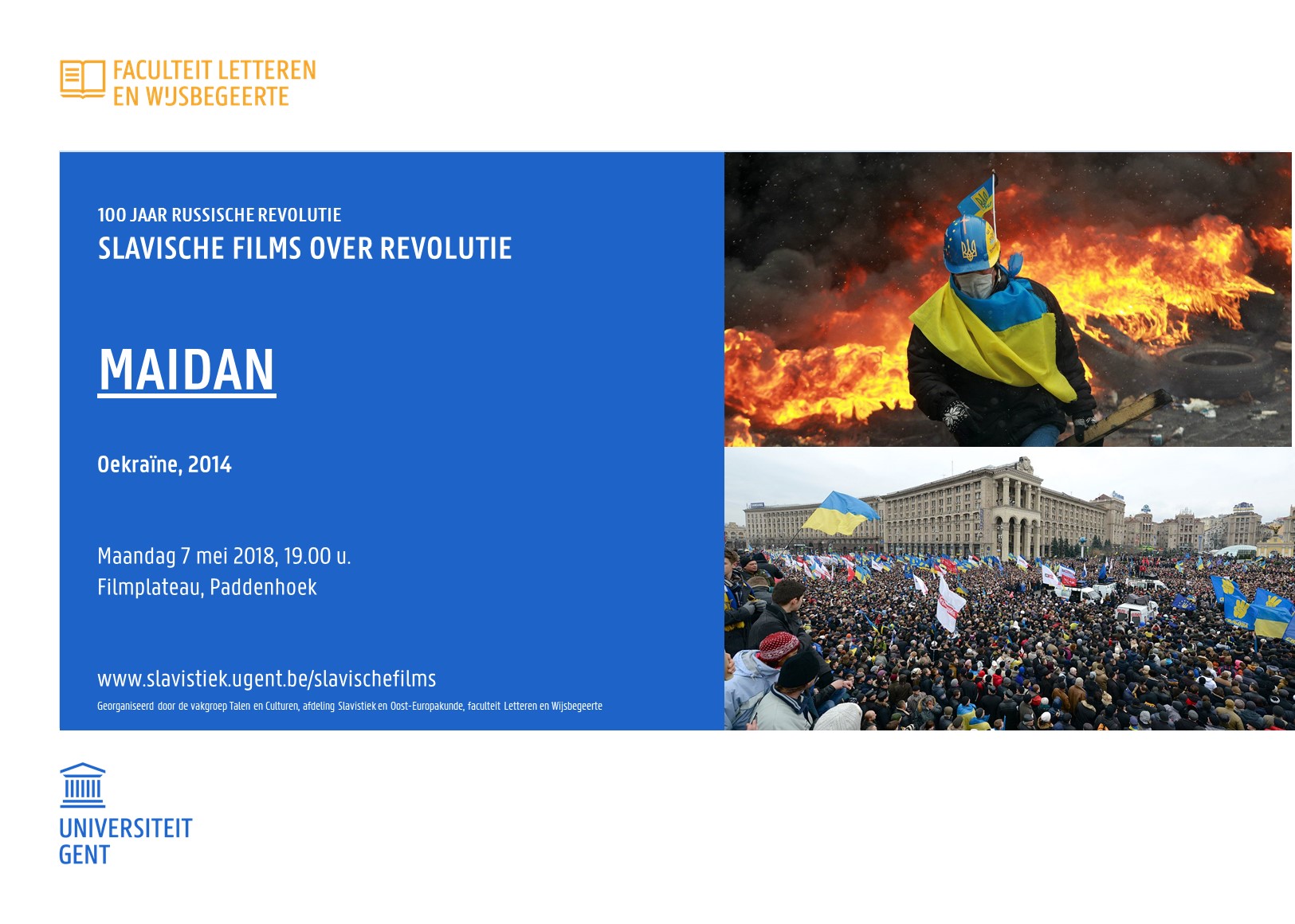
Fraternité and egalité among the nations of former Yugoslavia – a historical overview

Lecture: Bratstvo in enotnost med narodi bivše Jugoslavije – zodovinski pregled / Fraternité and egalité among the nations of former Yugoslavia – a historical overview

Prof. dr. Božo Repe, History department, University of Ljubljana


Prof. dr. Repe is an expert on contemporary Slovene history, history of the Balkans and Central Europe. Fraternity and equality of all nations and nationalities was included into the Constitution of Yugoslavia as one of the fundamental principles and prof. dr. Repe will give a talk on different representations of this principle, as well as other relations and relationship among the ex-Yugoslav nations in different periods of south-Slavic connections and on the role that Slovenia and the Slovenes played in this process.

This lecture is organized as a part of a greater project called World Festival of Slovene Culture organized in 2016/2017 at around 60 universities around the world, where one can study Slovene language and culture.