Soviet literature going global: ‘International Literature’ (1932-1945) and its ‘foreign’ audiences

Yelena Ostrovskaya (University of Strassbourg)

Abstract

The International Literature journal was conceived by the International Union of Revolutionary Writers as an “organ of revolutionary militant thought” published in the four main European languages, Russian, English, German and French. In reality, however, it gave birth to four editions, united by title and editorial board, but differing in their aims and audiences, especially between the Russian and ‘foreign’ versions. While the ‘foreign’ editions originally published authors from different countries in an attempt to create a ‘commons’ of communist world literature (Clark), in the late 1930s they virtually became the mouthpiece of Soviet literature. The paper discusses the journal as a project, with a special focus on the English version and its route to foreign readers.

Between transformation and marginality: Post-socialist and post-war urban life

Vjollca Krasniqi (University of Prishtina)

Abstract

This presentation focuses on urban life at the fringe of Prishtina, the capital city of Kosovo. It discusses the histories, practices, and processes of urban transformation and marginality and how urban margins have evolved in the post-war and post-socialist contexts of the city centre. Grounded in the framework of large-scale political transformations, including post-socialism, post-war, and state-building processes, it explores their impact on urbanisation. In particular, it examines urban sprawl as a result of informal and ‘un-designed’ urbanism, providing an impetus for myriad urban scapes. These not only profoundly shape the urban social fabric, but also give rise to conflicting narratives and imaginations of city life. Adopting a critical lens on the dialectic of center-periphery and the production of scapes in Prishtina’s contested public spaces it demonstrates tensions, conflict, and contestation accompanying the urban sprawl – a by-product of the neoliberal economy – and the dynamics of post-socialist and post-war urban life in Prishtina and Kosovo as a whole.

Bio

Dr. Vjollca Krasniqi is an Associate Professor at the Faculty of Philosophy, and Faculty of Arts, at the University of Prishtina. She holds a Ph.D. from the University of Ljubljana, an M.Sc. degree in Gender, Development, and Globalization from the London School of Economics and Political Science (LSE), and a BA degree in Philosophy and Sociology from the University of Prishtina. Her main research interests are gender, nation-building, collective memory, post-war justice, and human rights. She has been teaching at the University of Prishtina, Faculty of Philosophy courses on research methods, contemporary sociological theories, ethics, gender studies, and human rights. Currently, she also teaches at the Faculty of Arts at the University of Prishtina courses on gender studies and sociology of art. She was a visiting scholar at Dartmouth College, US (2016). She is the co-founder of the University Program for Gender Studies and Research (2013-) and also served as the co-chair (2014-2018). She is a member of the steering committee of the Memory Studies Association Regional Group South East Europe (2020-). She is the co-chair of the Working Group on Training and Capacity Building of the COST Action Slow Memory (2021-). She serves on the boards of Humanitarian Law Center Kosovo (2019-), and Atifete Jahjaga Foundation (2018-), and is the chair of the Board of Directors of Save the Children Kosovo (2021-). She has worked on numerous projects on gender issues and has been active in the women’s movement in the Balkans.

A Happy Blend and a Best Buy: Tourism history and social change along the East Adriatic from the 1840s to the present

Igor Duda (Juraj Dobrila University of Pula)

Abstract

Under Habsburg rule in the 1840s, the East Adriatic coast saw the emergence of organised tourism. Among the upper classes at the time, seawater and air were considered essential for wellness during winter holidays at seaside health resorts. A century later, in socialist Yugoslavia, the rising working class became domestic tourists, with summer holidays at the beach, predominantly in Croatia, viewed as a pathway to well-being and a higher standard of living. By the 1960s, post-war social tourism was complemented with a booming commercial tourism industry, attracting millions of foreign visitors. This mass tourism reshaped local seaside communities, influenced the needs and expectations of Yugoslavia’s growing travel and consumer culture, and helped to create an open and welcoming international image for the country. The history of Adriatic tourism mirrors Croatia’s history within Austria-Hungary, Yugoslavia and later, including the economic, social and cultural changes from the 19th century to the present.

Bio

Igor Duda is a full professor at the Department of History, Faculty of Humanities, and at the Centre for Cultural and Historical Research of Socialism, Juraj Dobrila University of Pula. He is focusing on history of everyday life and social history of socialist Yugoslavia, particularly on history of leisure, tourism, consumer culture, standard of living, childhood, making of a socialist citizen and citizens’ participation in social self-management.

He was the principal investigator of the research projects Making of the Socialist Man. Croatian Society and the Ideology of Yugoslav Socialism and Microstructures of Yugoslav Socialism: Croatia 1970-1990. At the University of Pula he teaches courses in contemporary history. He also teaches at the PhD programme in modern and contemporary history at the Faculty of Humanities and Social Sciences, University of Zagreb. He is the initiator and head of the annual summer Doctoral Workshop in Pula (since 2015), co-organiser of the biennial conference series Socialism on the Bench (since 2013), as well as the co-editor-in-chief of the journal History in Flux (since 2019). He is co-founder of the Centre for Cultural and Historical Research of Socialism and the head of the Chair of Late Modern and Contemporary History.

Literaire vertaling in Russische emigratietijdschriften tijdens het Interbellum: Russia Abroad in dialoog met de gastcultuur?

Anna Namestnikov (Universiteit Gent)

Abstract

Na de Bolsjewistische revoluties van 1917 en de daaropvolgende burgeroorlog ontvluchtten meer dan een miljoen Russen hun thuisland en vormden zij Russischtalige diasporagemeenschappen wereldwijd, vooral in Europese steden als Berlijn, Parijs en Praag, maar ook in steden als New York en Harbin. Deze émigré-samenleving, vaak aangeduid als ‘Russia Abroad’, zocht manieren om om te gaan met het verlies van hun prerevolutionaire vaderland en verleden, de opkomst van de Sovjet-Unie en het leven in de nieuwe gastlanden. Dit proces, door Greta Slobin (2013) omschreven als een ‘triangulatie’ van invloedsferen, was cruciaal voor de culturele identiteit en productie van Russia Abroad en resulteerde in een voortdurende interactie met ‘de Andere’.

In deze lezing richt ik mij op een tot nu toe onderbelicht aspect van dit culturele veld, namelijk de literaire vertaling van buitenlandse literatuur naar het Russisch. Welke auteurs, genres en thema’s werden het vaakst vertaald? Wie waren de vertalers, en hoe werd deze vertaalde literatuur gepresenteerd aan de Russische émigré-lezer?

Om deze vragen te beantwoorden, analyseer ik twee populaire mainstream tijdschriften: Illjustrirovannaja Rossija (Geïllustreerd Rusland, Parijs; 1924-1939) en Roebezj (Grens, Harbin; 1927-1945). Beide publicaties brachten regelmatig literaire vertalingen, naast een brede mix van andere content (Russische literatuur, nieuws, satire, kruiswoordpuzzels, modepagina’s, etc.), maar opereerden in verschillende gastlanden (Frankrijk en China). Door deze twee tijdschriften met elkaar te vergelijken, stel ik de vraag centraal of en hoe literaire vertaling werd ingezet om een dialoog met de gastcultuur aan te gaan.

Bio

Anna Namestnikov is an FWO Fundamental Research Fellow at the Russian section of the Department of Translation, Interpreting and Communication (Faculty of Arts and Philosophy, Ghent University), where she is a member of the TRACE research group. She obtained a Master of Arts in Eastern European Languages and Cultures (Russian and Bosnian/Croatian/Serbian) in 2019-2020 (Ghent University). Before starting her FWO project, Anna worked as a teaching and research assistant (September 2021 – November 2023, Department of Translation, Interpreting and Communication, Ghent University), where she co-taught courses on Russian grammar and Russian literature and conducted preliminary research for her PhD project. As of November 2023 she has been working on a PhD project on the system of translation in Russian émigré periodicals (1919-1939) under the supervision of Piet Van Poucke.

Critical feminist perspectives on peace and security in the Armenian-Azerbaijani conflict

Sevinj Samadzade (Universiteit Gent)

Abstract

This lecture critically interrogates the Nagorno-Karabakh conflict through a feminist lens, questioning both the historical and contemporary peacebuilding efforts that often fail to address the deep-rooted issues of militarism, nationalism, and gender injustices inherently connected with the conflict context. It challenges the prevailing liberal peace frameworks that see gendered inclusion as immanence within the already patriarchal power structures rather than dismantling them. By focusing on the Armenian-Azerbaijani context, the lecture critiques how peacebuilding initiatives have historically sidelined the lived experiences of women and other marginalized genders in conflict zones.

Drawing from the stories of women in both Armenia and Azerbaijan, the lecture reveals the contradictions between peace rhetoric and the reality of heightened militarized masculinities and nationalism, which frequently exclude or instrumentalize women’s subjectivities. This approach critically reflects on the very nature of peacebuilding, calling into question whether current models truly foster sustainable peace or perpetuate cycles of violence and exclusion. It ultimately argues for a radical rethinking of peace and security, one that places the transformative potential of feminist approaches at the centre of conflict resolution efforts.

Bio

Sevinj Samadzade is a PhD Fellow at Ghent University, affiliated with both the Department of Political Science and the Department of Social Work and Social Pedagogy. She also holds a fellowship at the United Nations University-CRIS, where she is part of the Migration and Social Policy Cluster. Her PhD research explores the ways social work practices can reproduce geopolitical dynamics, aiming to deepen the understanding of the interaction between global and local scales in social welfare provisions.

Sevinj earned her master’s degree in Middle East, Caucasus, and Central Asian Security Studies from the University of St. Andrews in Scotland. Her work has primarily focused on the gender, peace, and security nexus in the South Caucasus region. With over a decade of experience working with various civil society groups in Azerbaijan and Georgia, she has been involved in processes related to dealing with the past, researching alternative histories, and the daily politics of armed conflicts. Additionally, she has implemented gender and peace education throughout the wider region.

Workshop: ‘The social experiences of urban space in socialist cities of Eastern Europe’

This workshop brings together urban historians and scholars of cognate disciplines for a discussion of the variegated social experiences of the socialist city in Eastern Europe. The contributors to the workshop cover a thematically and geographically wide range of case-studies, from extractive urbanism in Western Siberia to the nightlife of socialist Zagreb. Notwithstanding this diversity, the workshop papers all put emphasis on the constitutive role of urban space in the social history of the region.

Workshop programme

The workshop kicks off with a keynote by Heather D. DeHaan, Associate Professor of History and Director of Russian and East European Studies at Binghamton University. The lecture is open to the public.

!CANCELED! Keynote – Heather DeHaan (Binghamton University)

‘How Socialist Citizens Fabricated Cities: Making Neighbourhoods in Soviet Baku’


Sociologist Richard Sennett defines the city as “a place where strangers meet,” a framing important to his commentary on urban life and yet a concept somehow alien to research on cities of the socialist East. Surely, strangers met there, too, and even became friends, acquaintances, or – more salient to this talk – neighbours? This lecture explores the temporal, geographic, and material dimensions of social interaction – and memories of that interaction – in Soviet Baku, using this to ask how we might productively rethink our concept of “the social” and “the urban” in both the Soviet Union and the Eastern Bloc.


Date: 30 January 2025          Time: 16:30-18:00          Place: !! Due to illness the keynote is canceled!

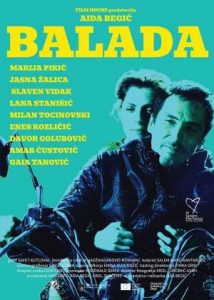
Balada | A Balad

Bosnië & Herzegovina 2022, Aida Begić 

Balada is een moderne interpretatie van het “perfecte vrouwbeeld” dat in veel Zuidslavische folklore ballades naar voren komt. In die ballades schikten vrouwen zich vaak aan hun tragische lot, in deze film, echter, gaat Begić op zoek naar moderne vrouwelijke liefde, vrijheid en identiteit.

Het hoofdpersonage van de film, Merjem-Meri, is een dertigjarige huisvrouw en moeder van de achtjarige Mila. Ze verhuist na een huwelijk van tien jaar weer naar haar ouderlijke huis. Meri ontdekt er snel dat ze er verstrikt raakt in een web van provinciale regels, verwachtingen en een complexe relatie met haar ambitieuze moeder en haar verwende jongere broer. In een poging om zichzelf opnieuw te leren kennen, waagt ze zich aan een auditie voor een film die in haar buurt zal opgenomen worden.

Как cпасти мёртвого друга | How to save a dead friend

(Rusland) / Zweden / Noorwegen / Frankrijk / Duitsland 2022, Marusja Syroečkovskaja

Vorig jaar nog op Film Fest Gent, dit jaar in onze intieme filmreeks.

In deze aangrijpende documentaire toont Syroečkovskaja hoe haar geliefde Kimi ten onder gaat aan drugs. Ze puzzelt hiervoor honderden uren beeldmateriaal samen die ze gedurende twaalf jaar (sinds haar zestiende) van haar leven heeft gemaakt. De film is tegelijk een weerspiegeling van het leven voor jongeren in Rusland: ze toont de inertie van de generatie millenials die zich machteloos voelt tegenover de toenemende politieke repressie onder Vladimir Poetin. 

De documentaire viel in de prijzen tijdens het Bilbao International Festival of Documentary and Short Films, Buenos Aires International Festival of Independent Cinema, Ghent Film Festival en Singapore International Film Festival.

Onlangs verscheen in Raam op Rusland een interview met de regisseur: https://www.raamoprusland.nl/dossiers/cultuur/2447-portret-van-een-depressieve-generatie


Светът е голям и спасение дебне отвсякъдe | The World Is Big and Salvation Lurks Around the Corner

Bulgarije 2008, Stefan Komandarev

De film begint in 1970, wanneer Alex (Saško) wordt geboren in een klein Bulgaars stadje. Zijn familie emigreert al snel naar het Westen, meer bepaald naar Duitsland. 25 jaar later slaat het noodlot toe. Door een zwaar auto-ongeluk verliest Saško zijn ouders en lijdt hij zelf aan geheugenverlies. Saško’s grootvader, de legendarische (of beruchte?) Bai Dan, komt naar Duitsland om hem te helpen. Bai Dan leert zijn kleinzoon backgammon spelen en neemt hem mee met een reis per tandem naar Bulgarije. Zo krijgt Saško uiteindelijk niet alleen zijn geheugen, maar ook zijn zin om te leven terug.

Светът е голям… is ondertussen uitgegroeid tot een cultfilm en kreeg vele onderscheidingen, zowel in Bulgarije als daarbuiten. Zo mag de film prijzen vanop de internationale filmfestivals in Bergen, Warschau, Zürich, Almaty, Vilnius, Minsk, Taipei, enz. op zijn palmares zetten.


Izbrisana | Erased

Slovenië 2018, Miha Mazzini & Dusan Joksimovic

Izbrisana (Erased) is een film van Miha Mazzini gebaseerd op zijn gelijknamige boek.

We volgen Ana, een jonge moeder die net bevallen is in het lokale ziekenhuis. Alles is in orde, maar er blijkt een klein probleem te zijn met haar papierwerk: haar dossier is niet te vinden in de computer. Eerst denkt het personeel dat het om een tijdelijk dataprobleem gaat door slechtwerkende software. Heel snel, echter, blijkt er meer aan de hand te zijn. Ana raakt steeds meer verward in een web van bureaucratie dat Kafkaiaanse proporties aanneemt. Doordat ze geen dossier heeft, heeft ze geen recht op sociale zekerheid, een permanent adres, en zelfs geen recht op haar kind. Ze wordt brutaal gedwongen om haar pasgeboren dochter achter te laten totdat alles opgelost is.

Uiteindelijk blijkt dat Ana niet ingeschreven is in het bevolkingsregister en dus als buitenlander wordt beschouwd, ook al heeft ze haar hele leven in Slovenië doorgebracht. Legaal bestaat ze eigenlijk niet, waardoor haar kind als wees wordt geregistreerd en op een lijst voor adoptie terechtkomt. De film gaat met dit verhaal in (op de gevolgen) van een donkere bladzijde uit de Sloveense geschiedenis. In 1991, na de Sloveense onafhankelijkheidsverklaring, heeft de overheid immers 2% van de bevolking uit het bevolkingsregister geschrapt.

De film is uitgebreid gelauwerd en viel onder meer in de prijzen tijdens het FEST International Film Festival (2019), het Pula Film Festival (2019) en het Slovene Film Festival (2018).